§ 2 — GCSE Revision Resources
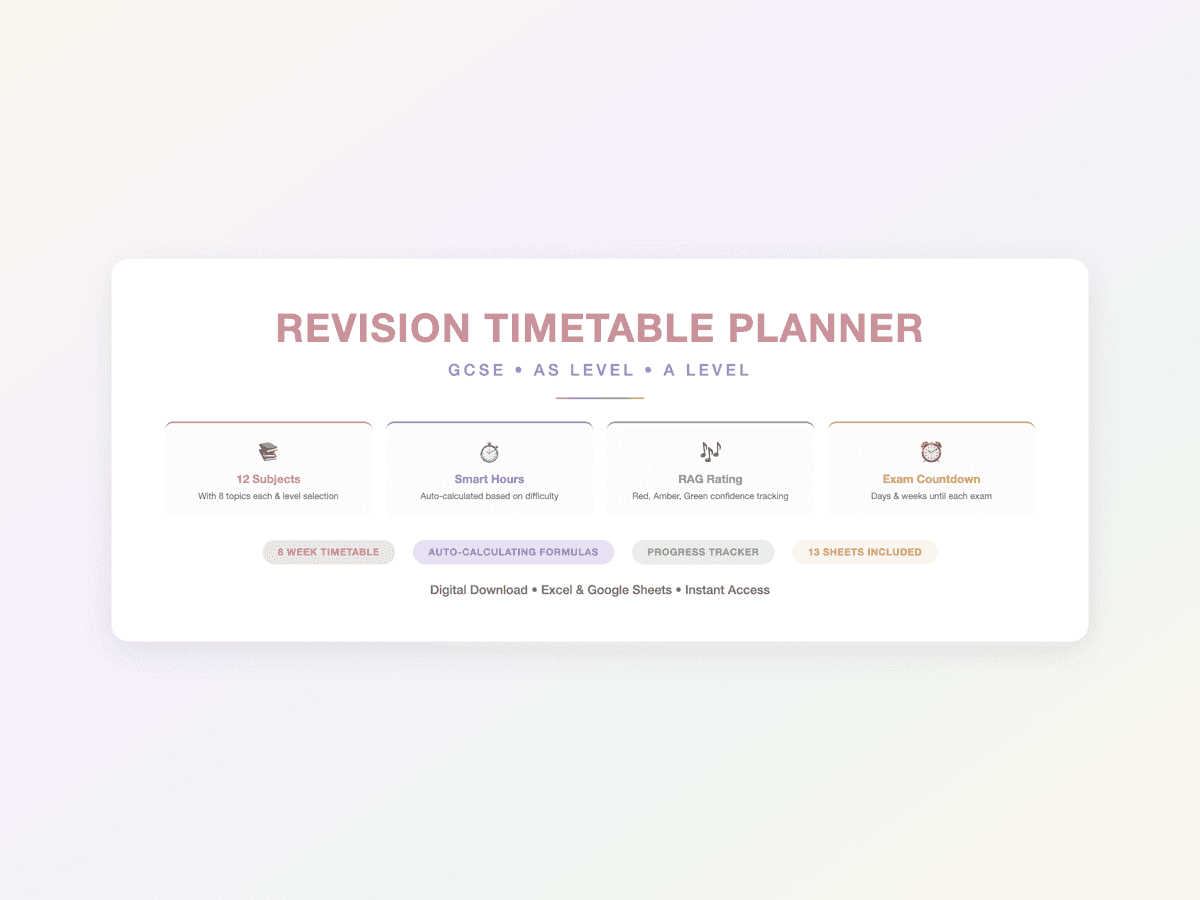
Revision Timetable Planner
£1.99Plan your revision with confidence
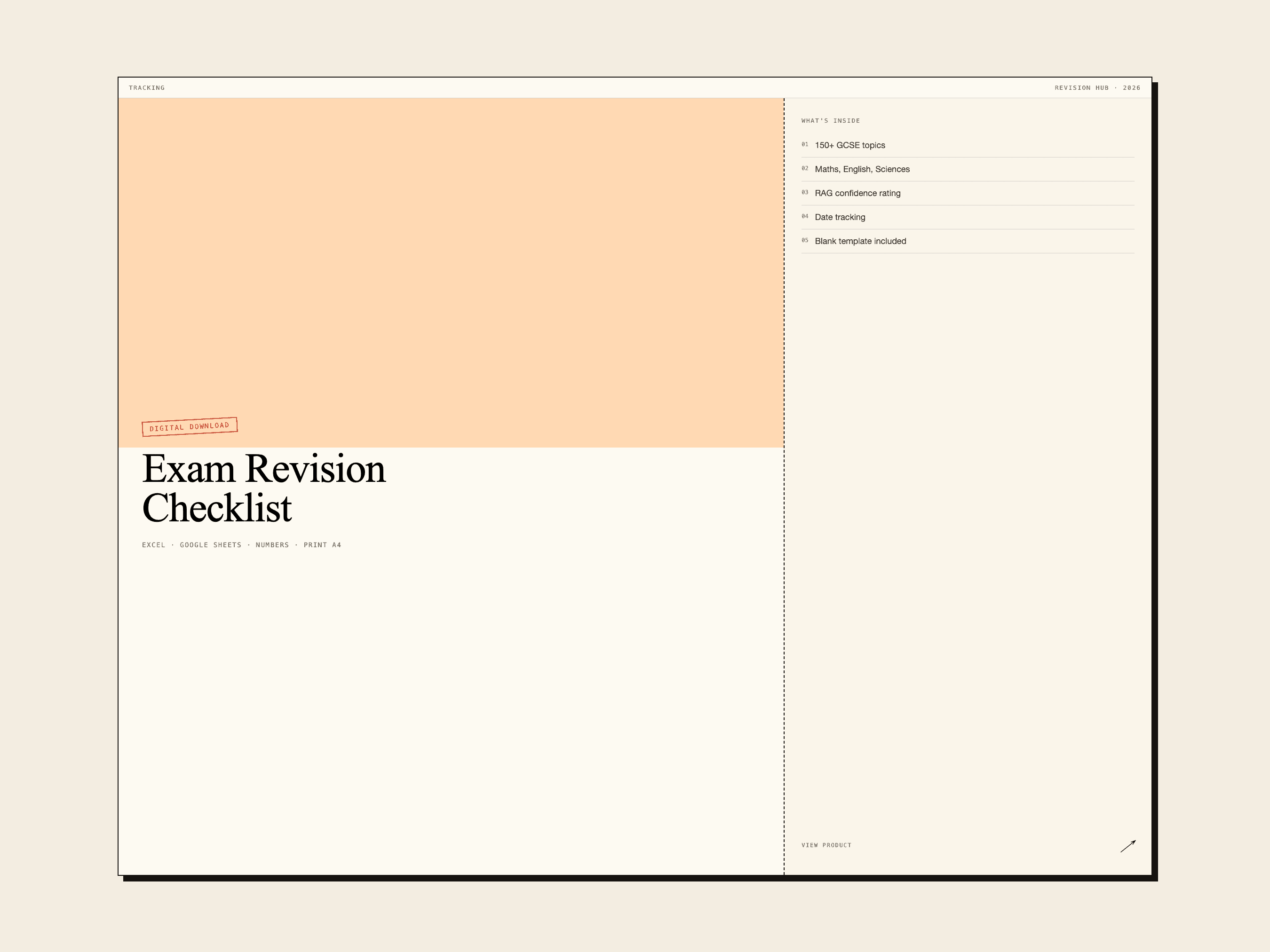
Exam Revision Checklist
£1.49Never miss a topic again
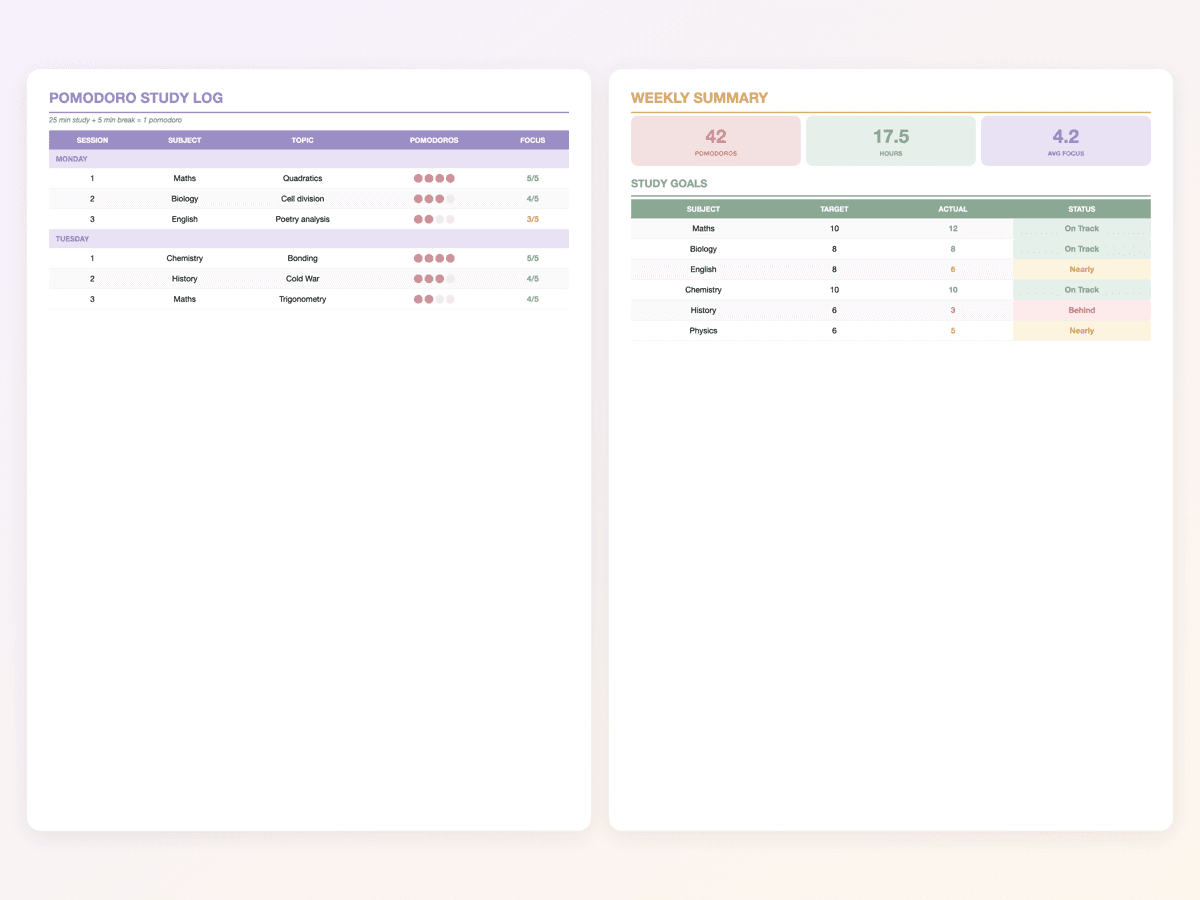
Pomodoro Study Log
£1.49Study smarter, not harder
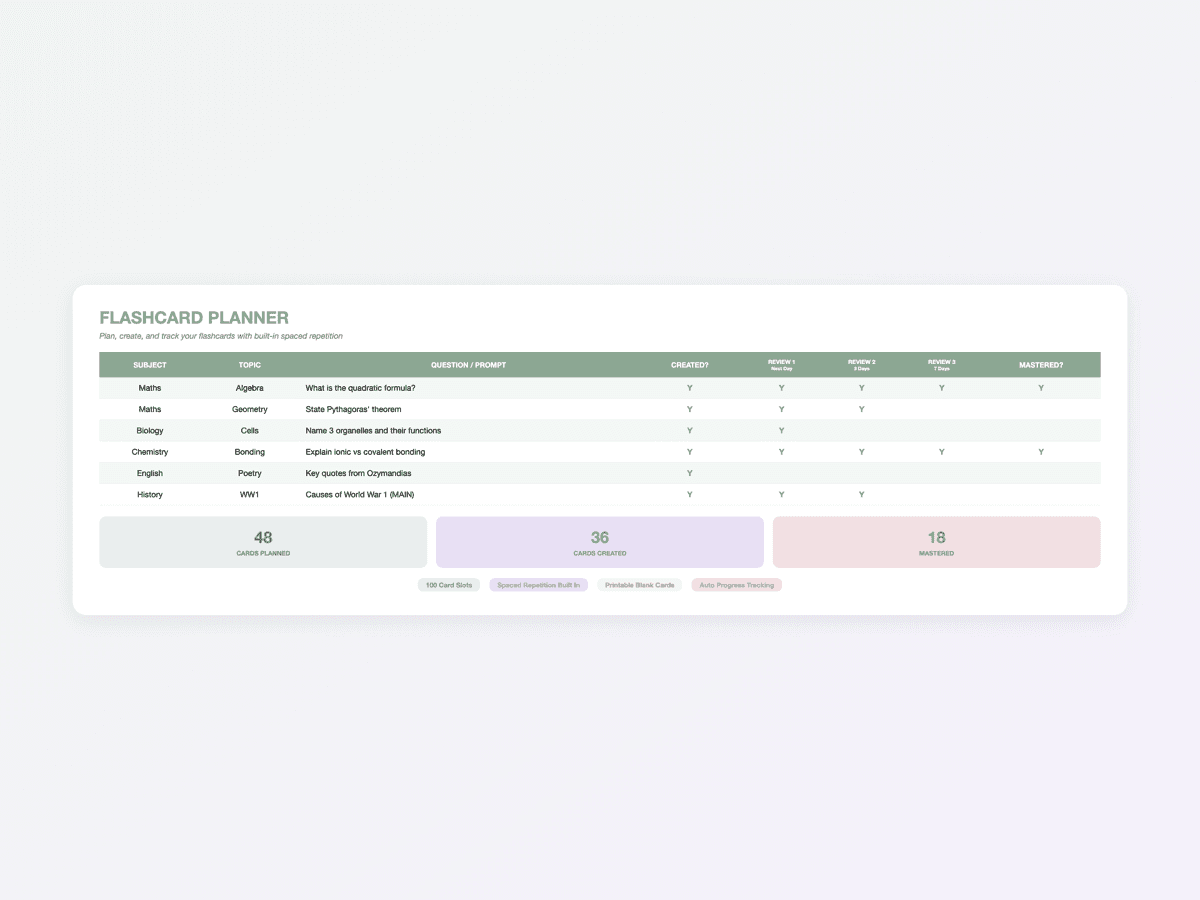
Flashcard Planner
£1.49Master your revision with spaced repetition
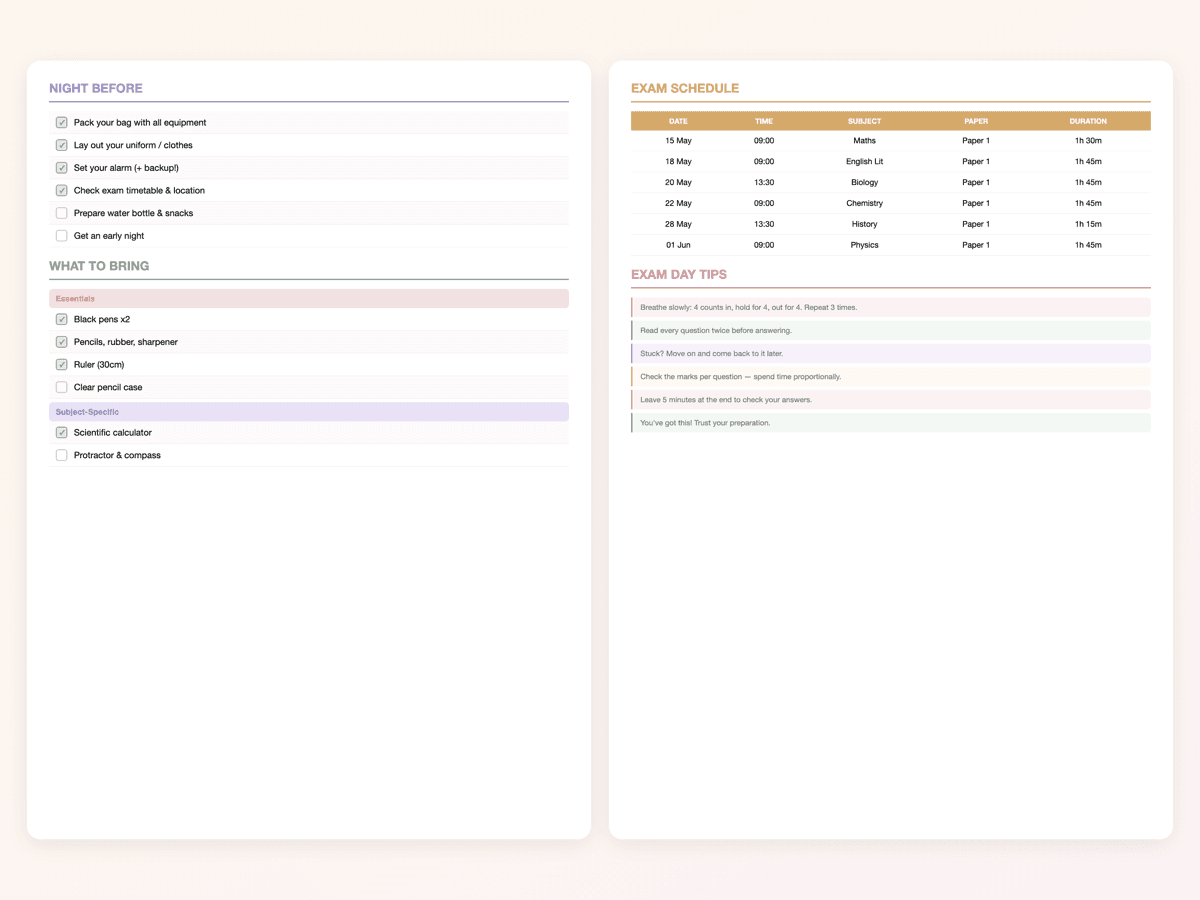
Exam Day Checklist
£0.99Walk into every exam prepared
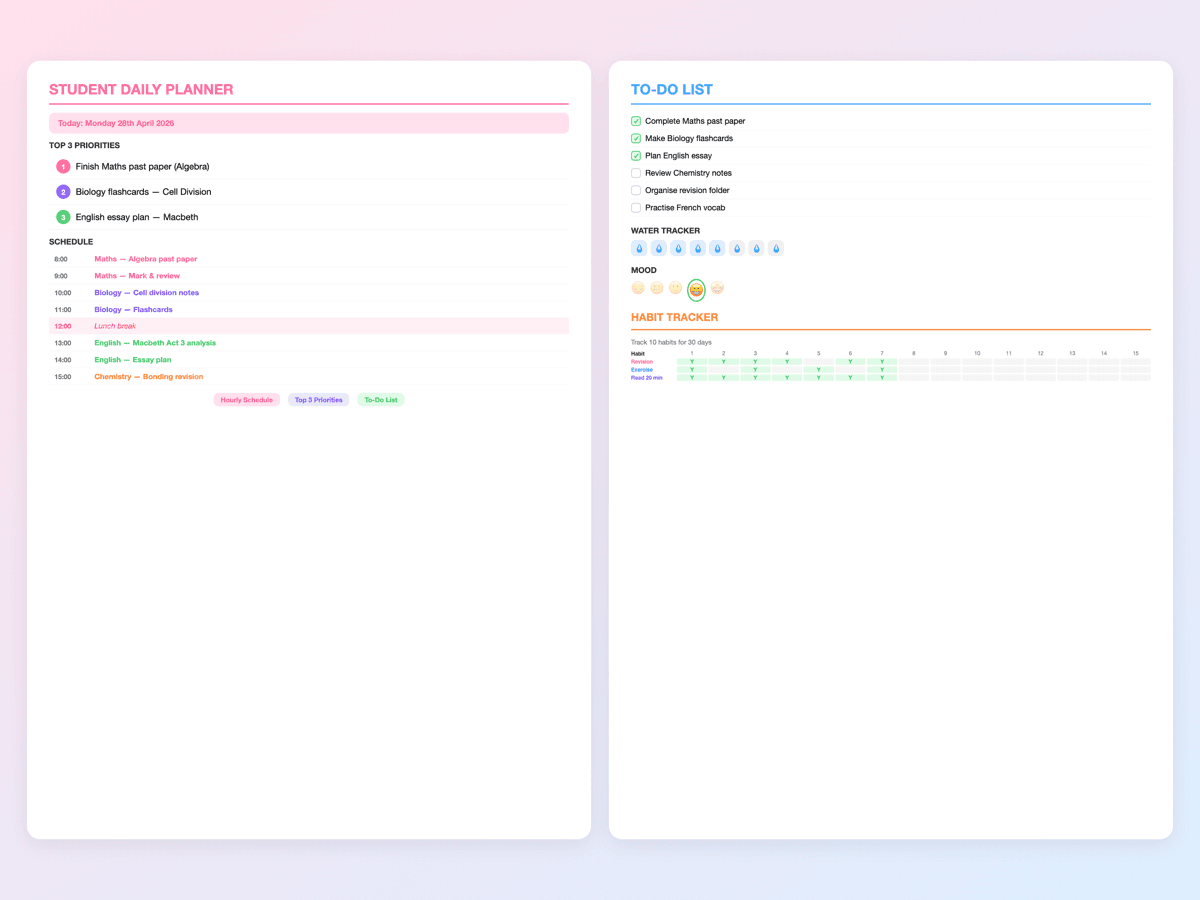
Student Daily Planner
£1.29Own every single day
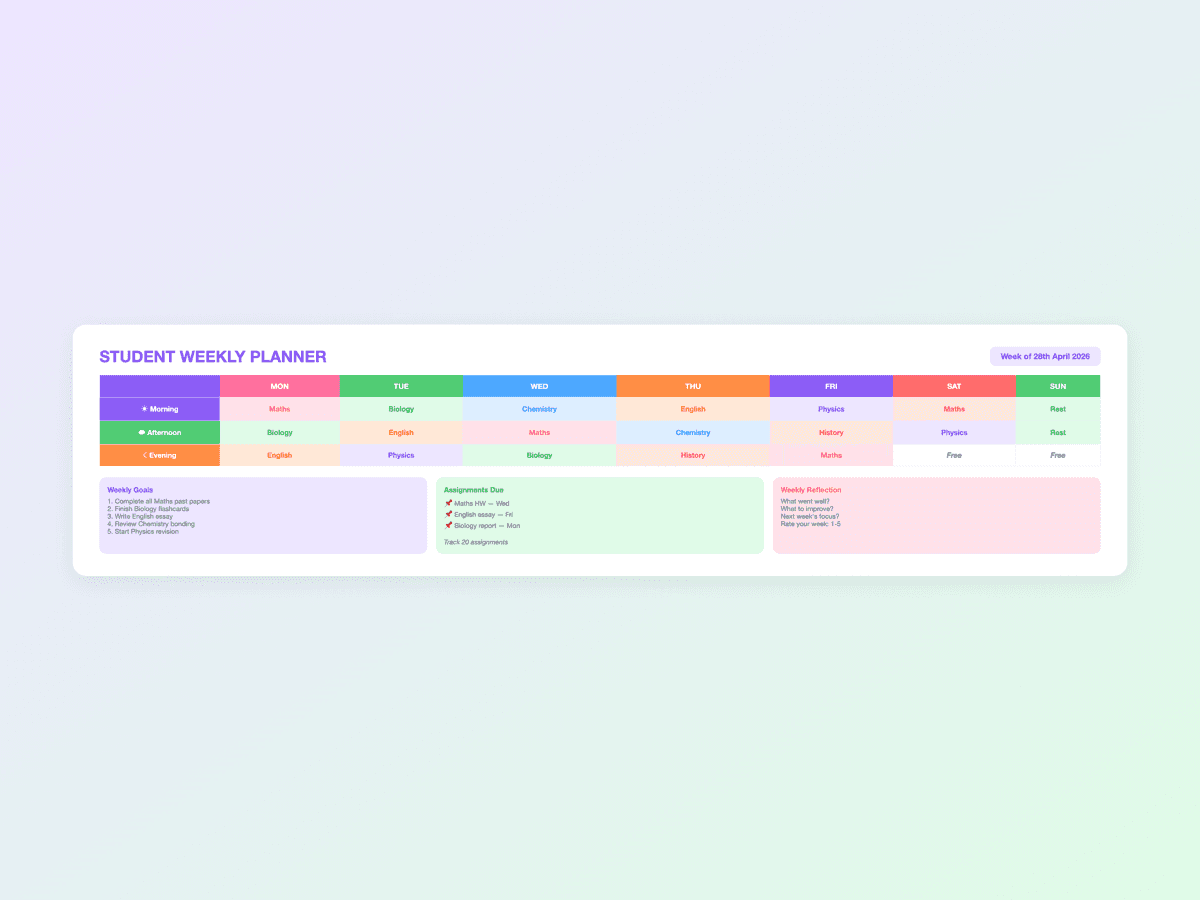
Student Weekly Planner
£1.29Plan your week, ace your goals
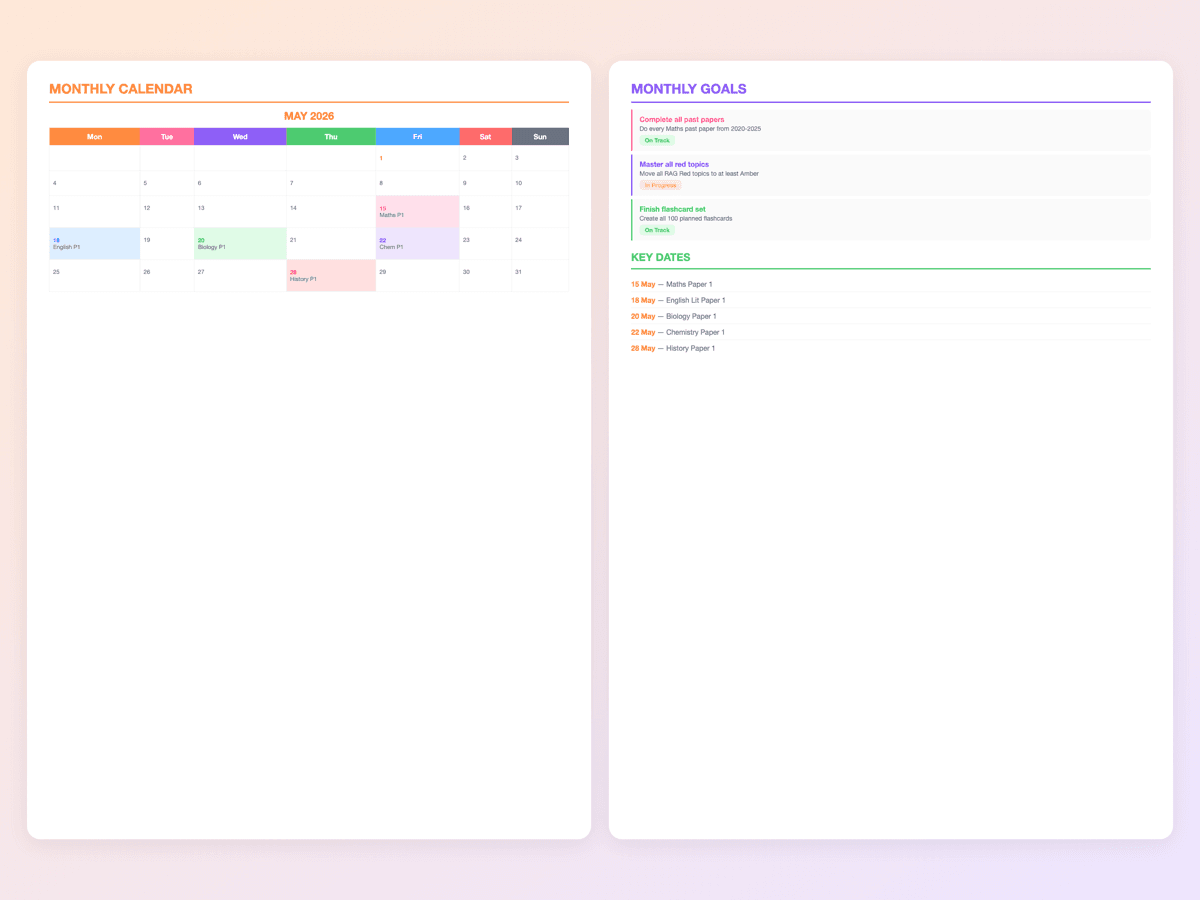
Student Monthly Planner
£1.29See the big picture
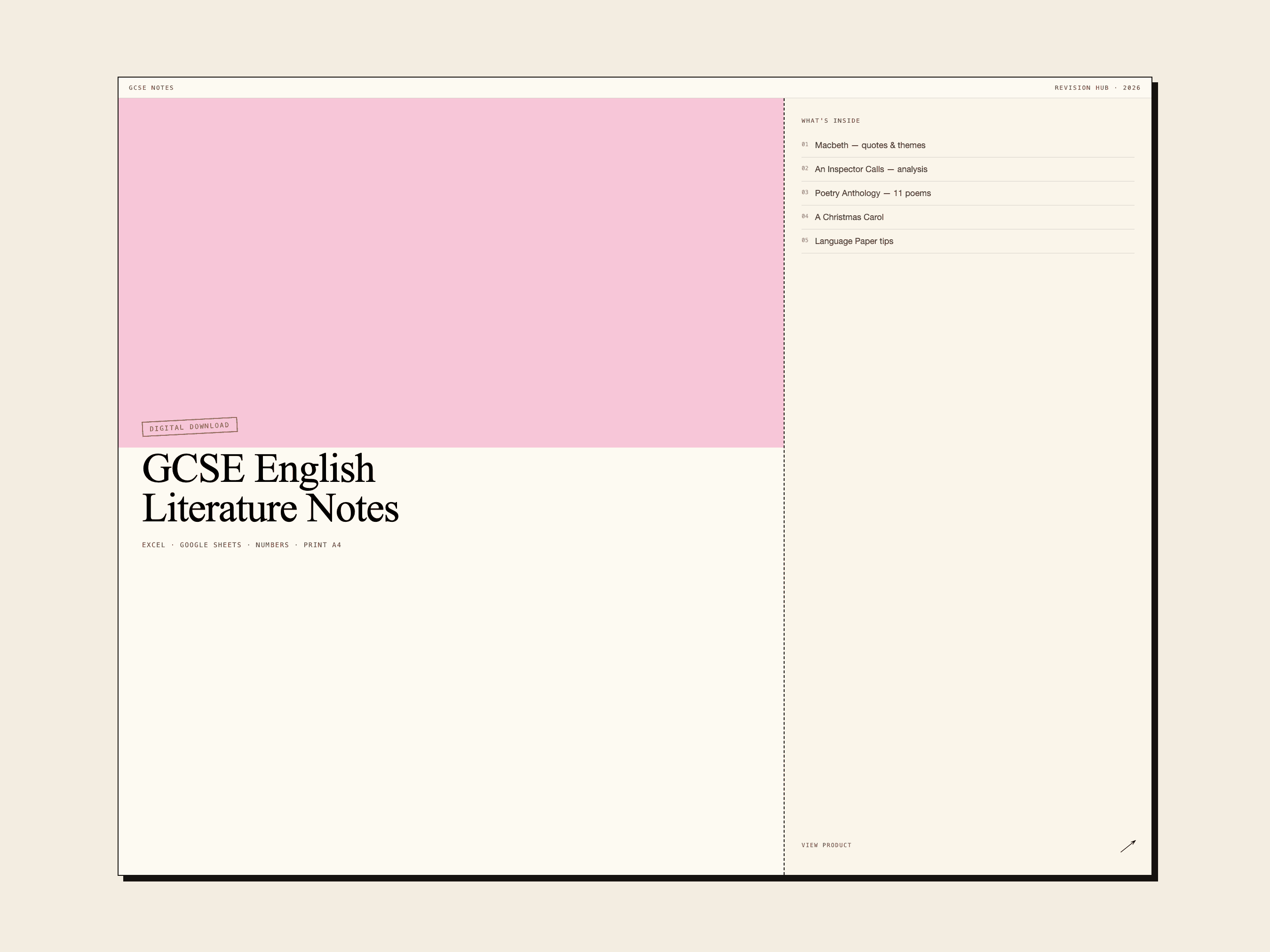
GCSE English Literature Notes
£2.49Key quotes and analysis for every text
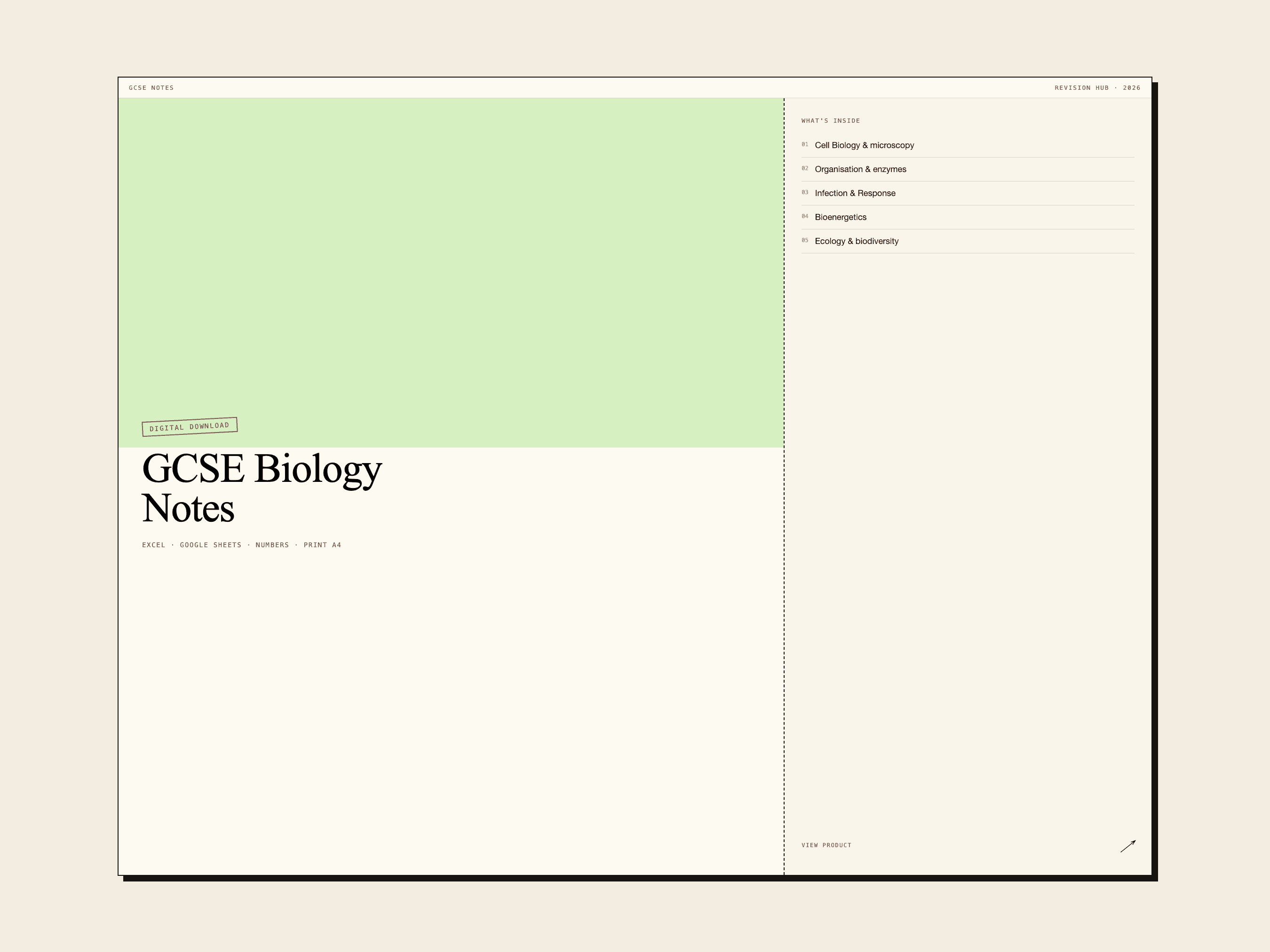
GCSE Biology Notes
£2.49Every Biology topic explained clearly
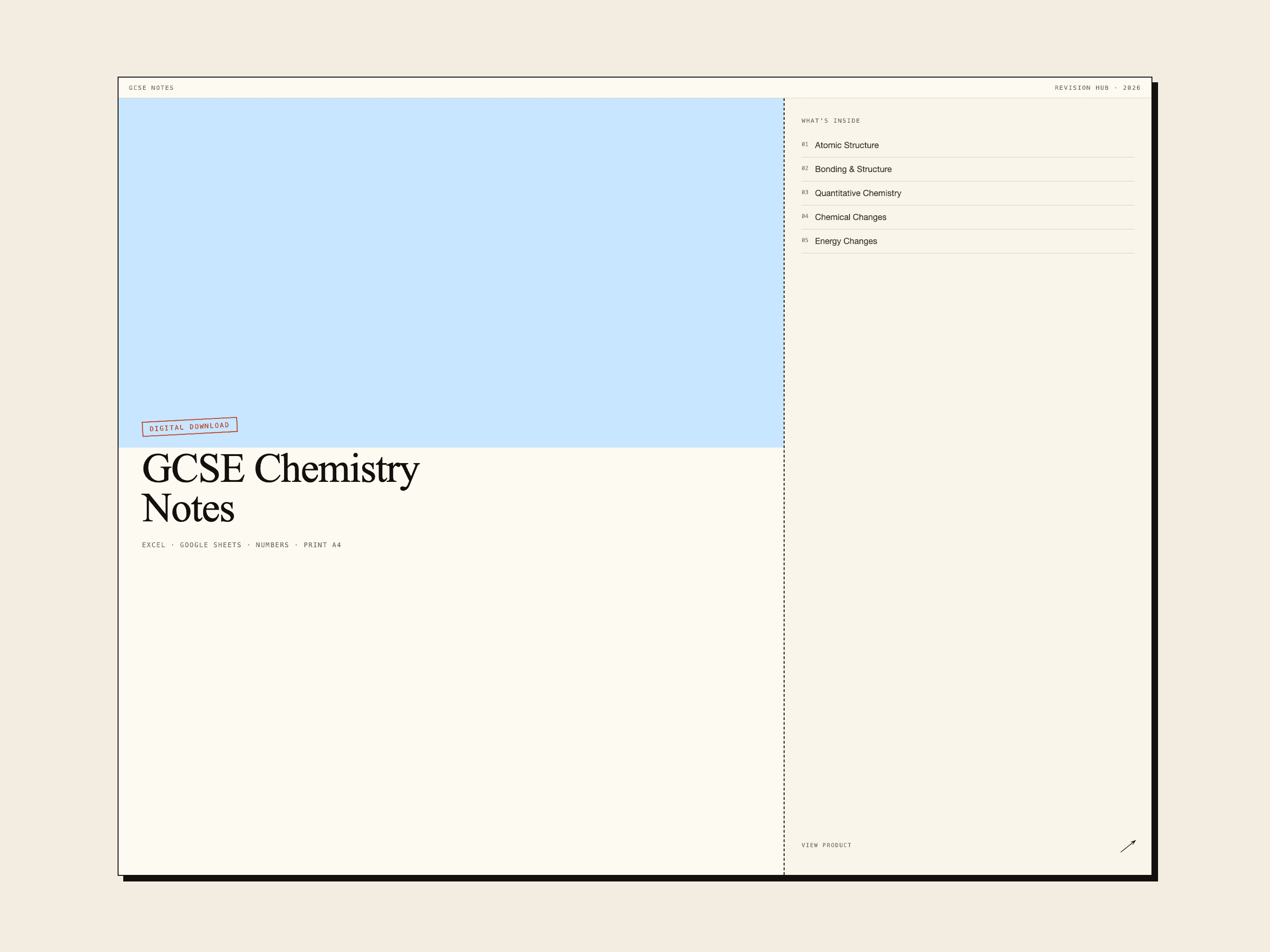
GCSE Chemistry Notes
£2.49Atoms to reactions — everything you need
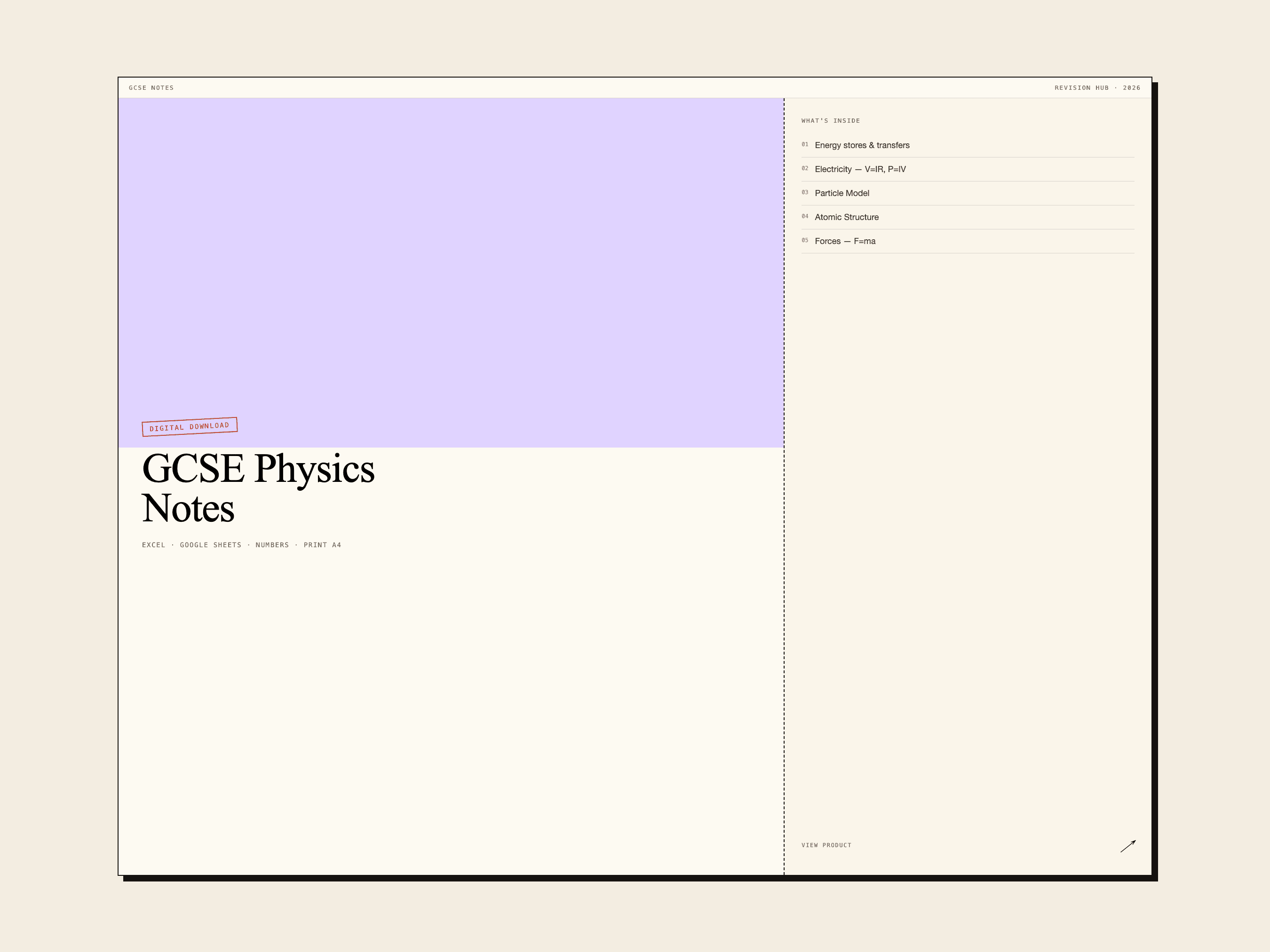
GCSE Physics Notes
£2.49Forces, energy, and everything in between
GCSE History Notes
£2.49Key dates, events, and analysis
GCSE Geography Notes
£2.49Case studies, processes, and key facts
Science Practicals Revision Cards
£2.99Every required practical on one sheet
Essay Planning Template
£1.49Plan any essay in 5 minutes
Past Paper Tracker
£1.49Track every paper, spot your weak topics
Mistake Log
£1.49Learn from every mistake you make
Knowledge Organiser
£1.49All your knowledge in one place
SATs Revision Planner
£1.49Fun, simple planning for Year 6
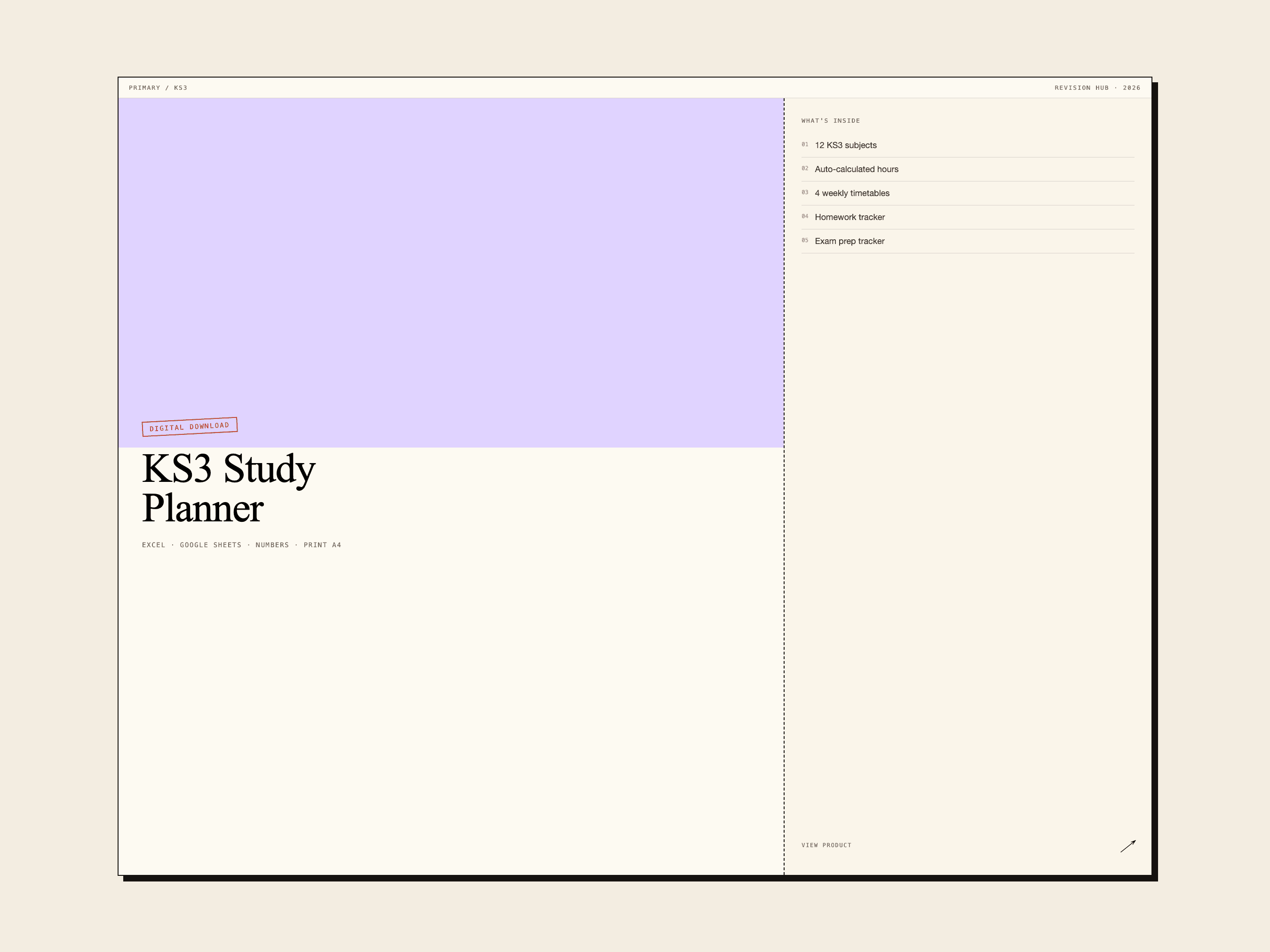
KS3 Study Planner
£1.49Get organised from Year 7
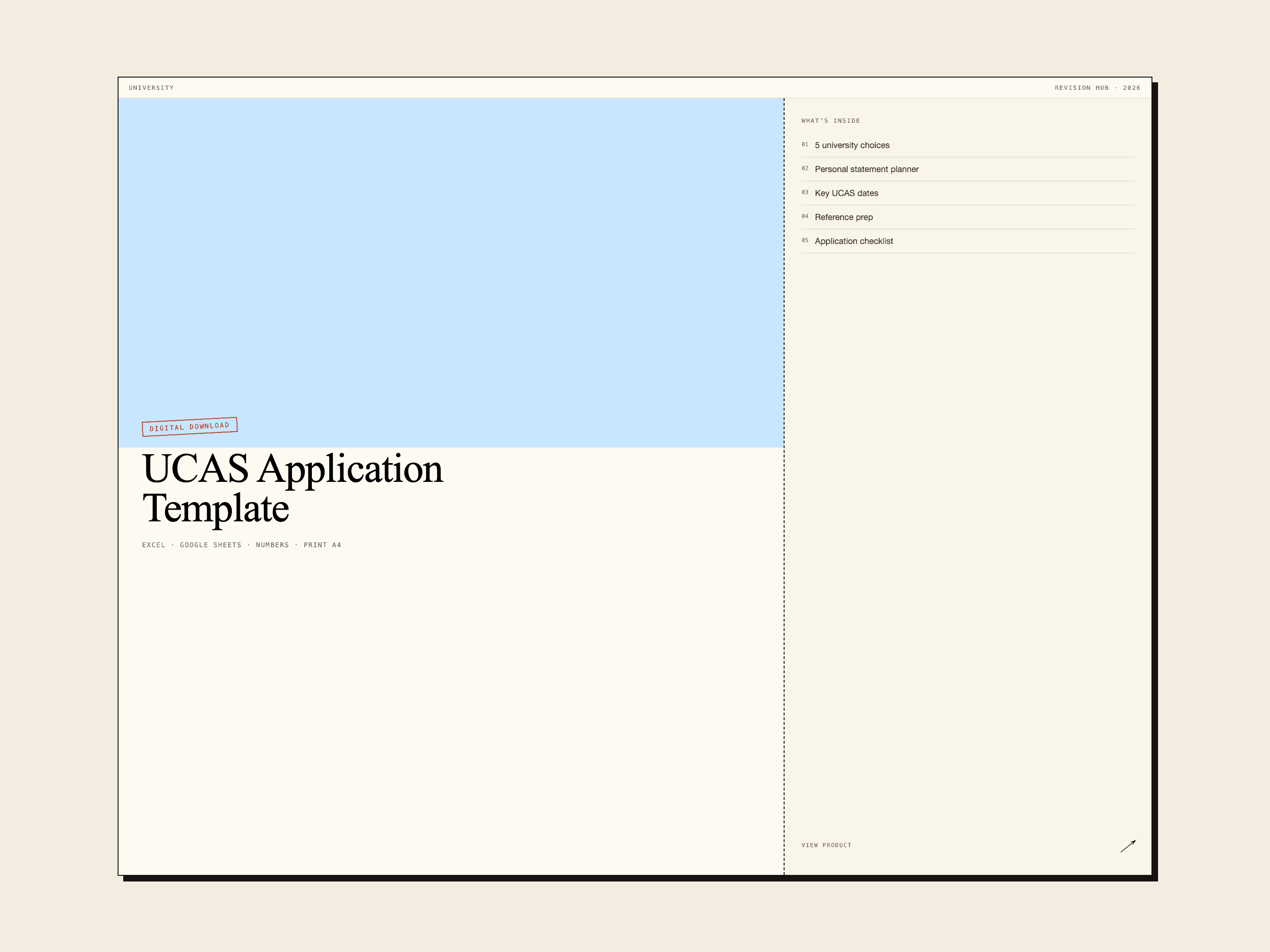
UCAS Application Template
£1.99Your university application, organised
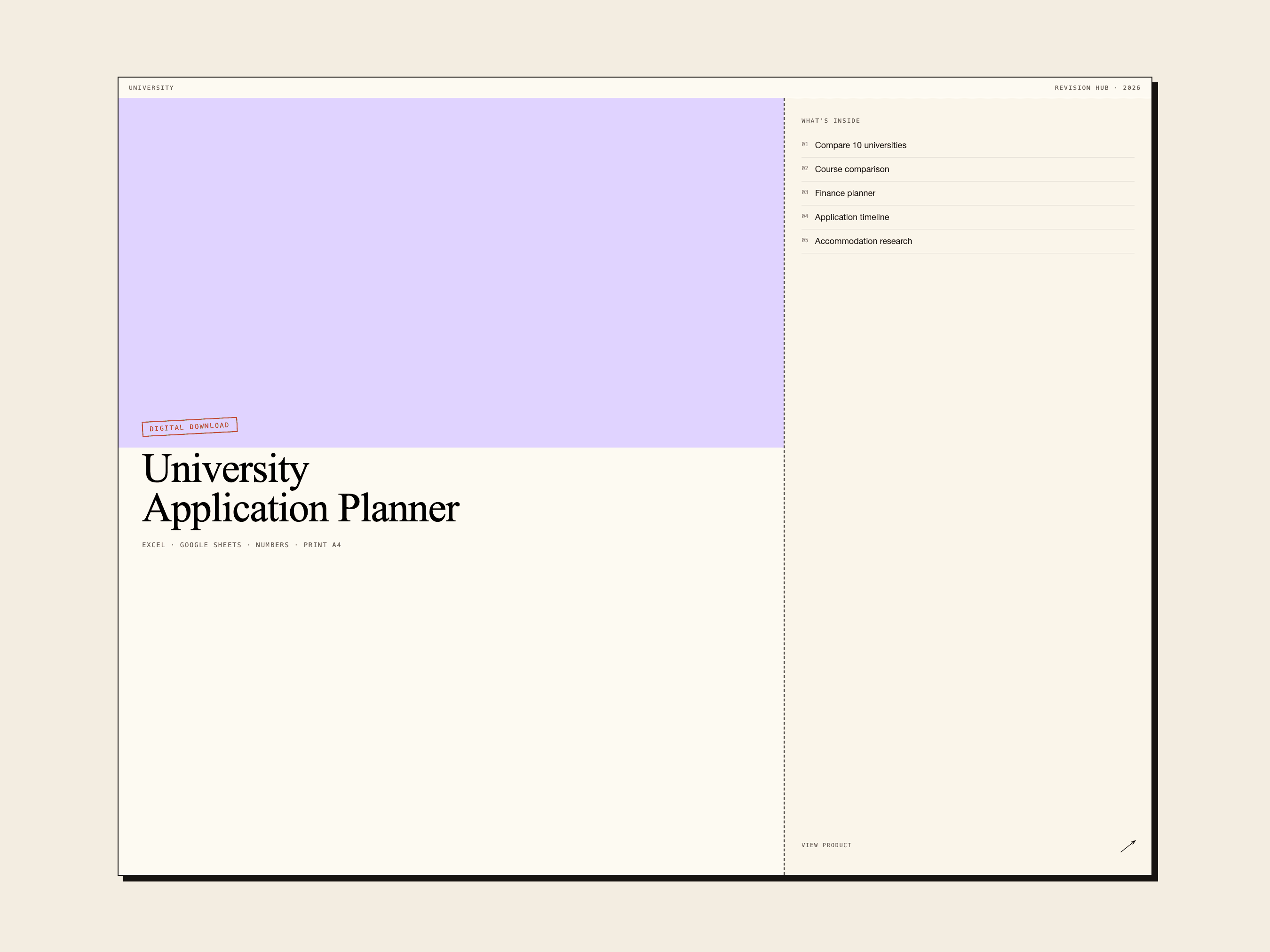
University Application Planner
£2.49From research to results day — all in one place
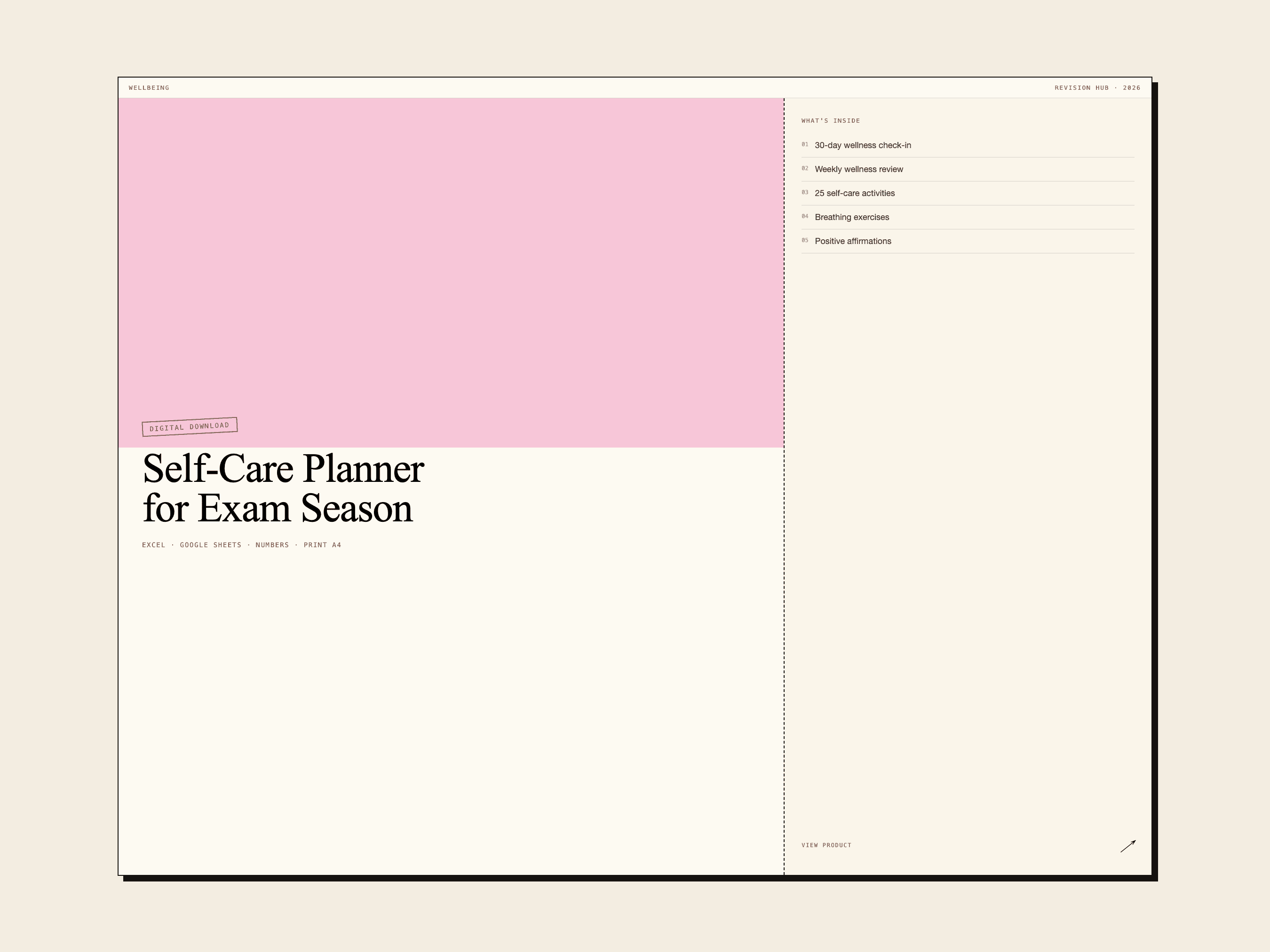
Self-Care Planner for Exam Season
£1.99Look after yourself while you revise

Exam Anxiety Workbook
£2.49Practical tools to manage exam stress
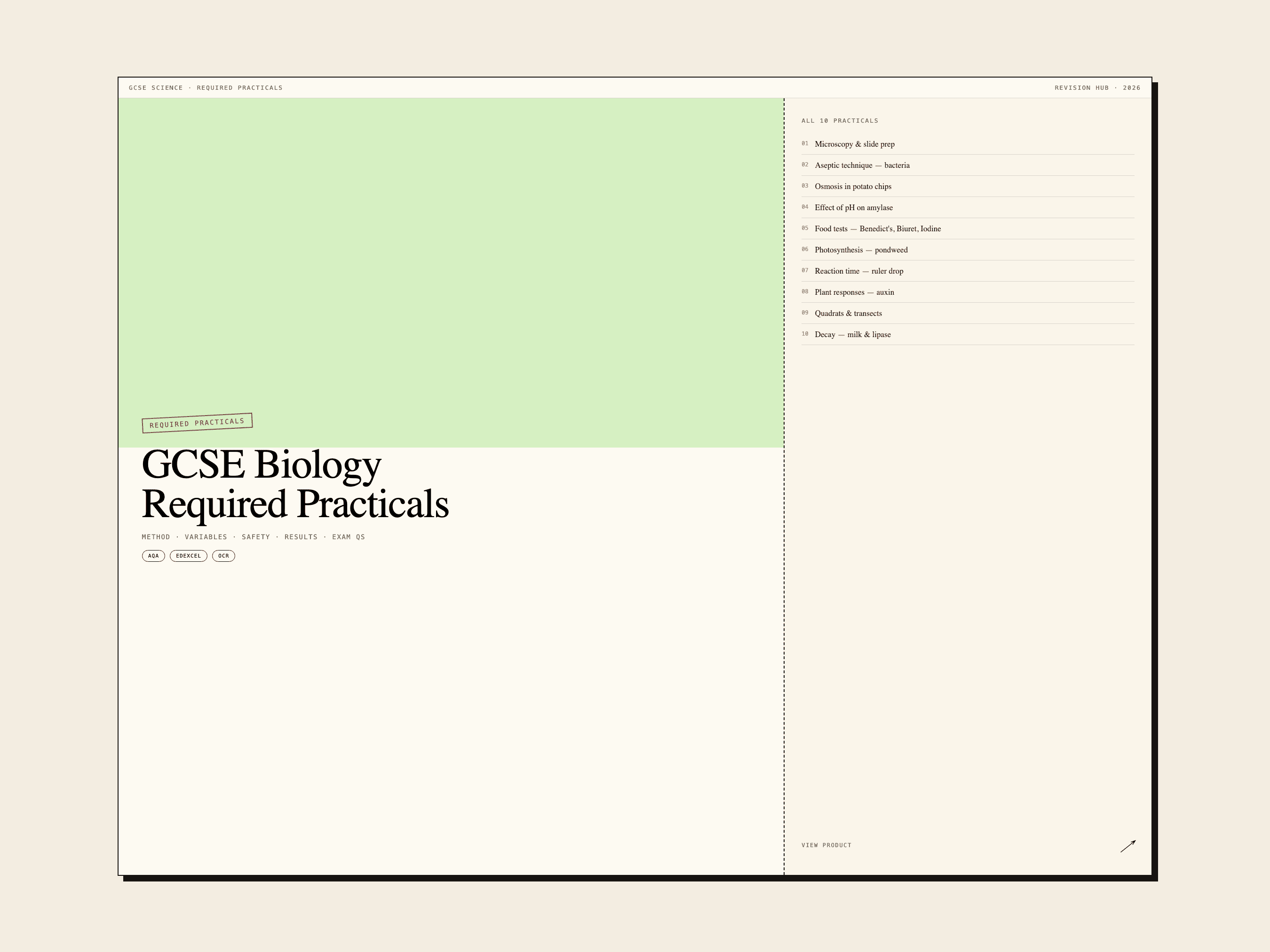
GCSE Biology Required Practicals
£2.49All 10 required practicals with full methods
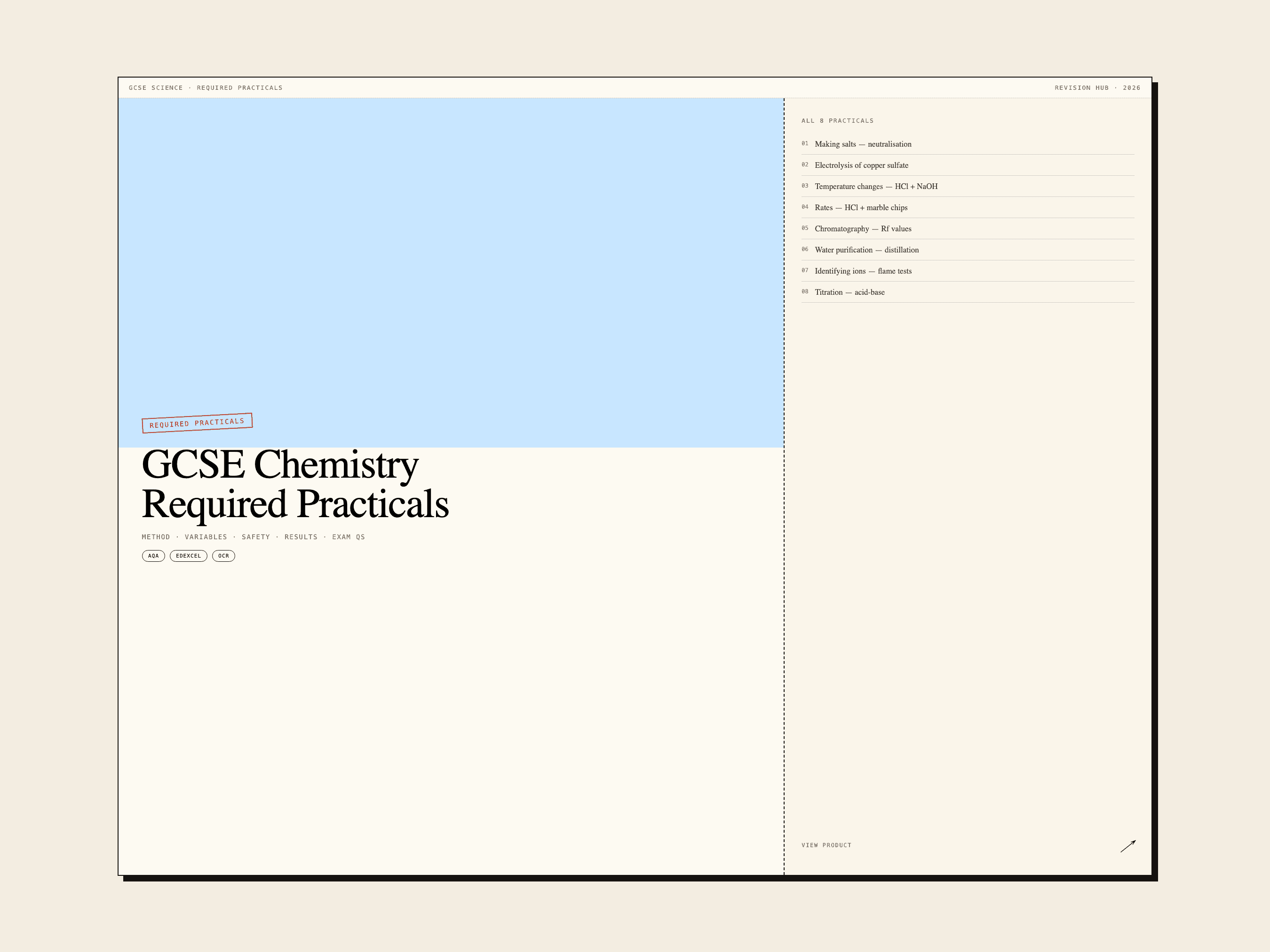
GCSE Chemistry Required Practicals
£2.49All 8 required practicals with full methods
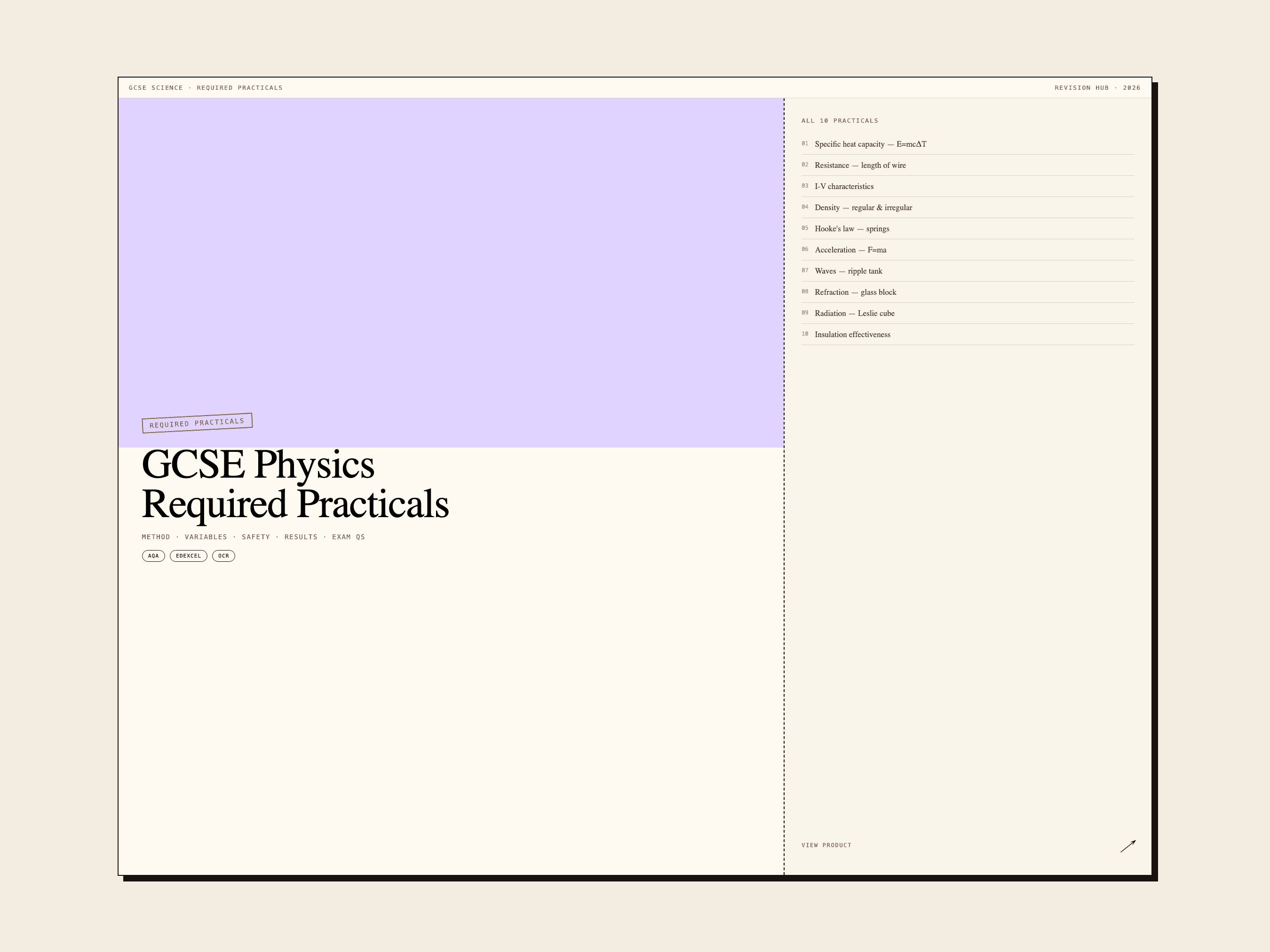
GCSE Physics Required Practicals
£2.49All 10 required practicals with full methods
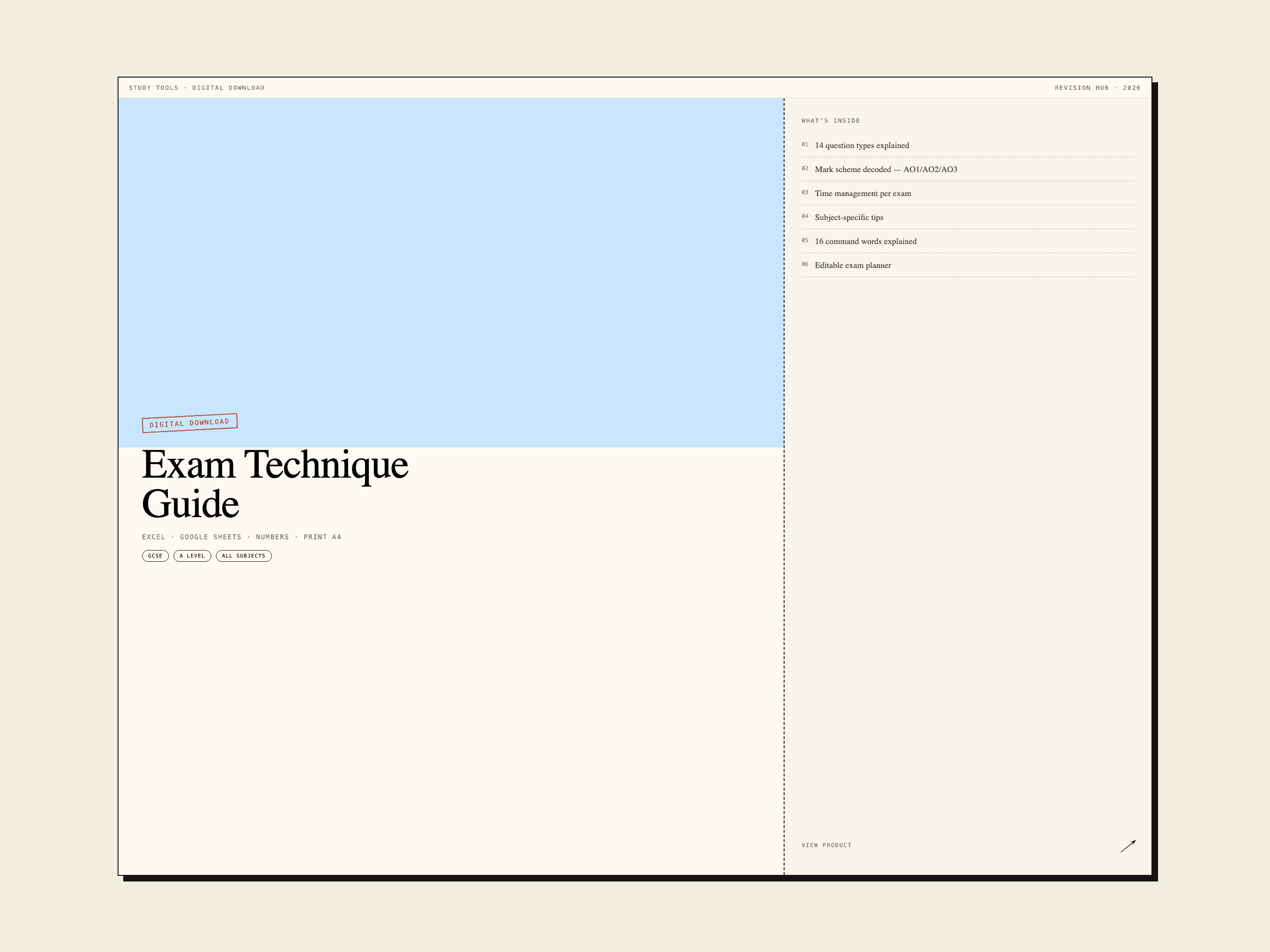
Exam Technique Guide
£1.99Stop losing marks on technique, not knowledge
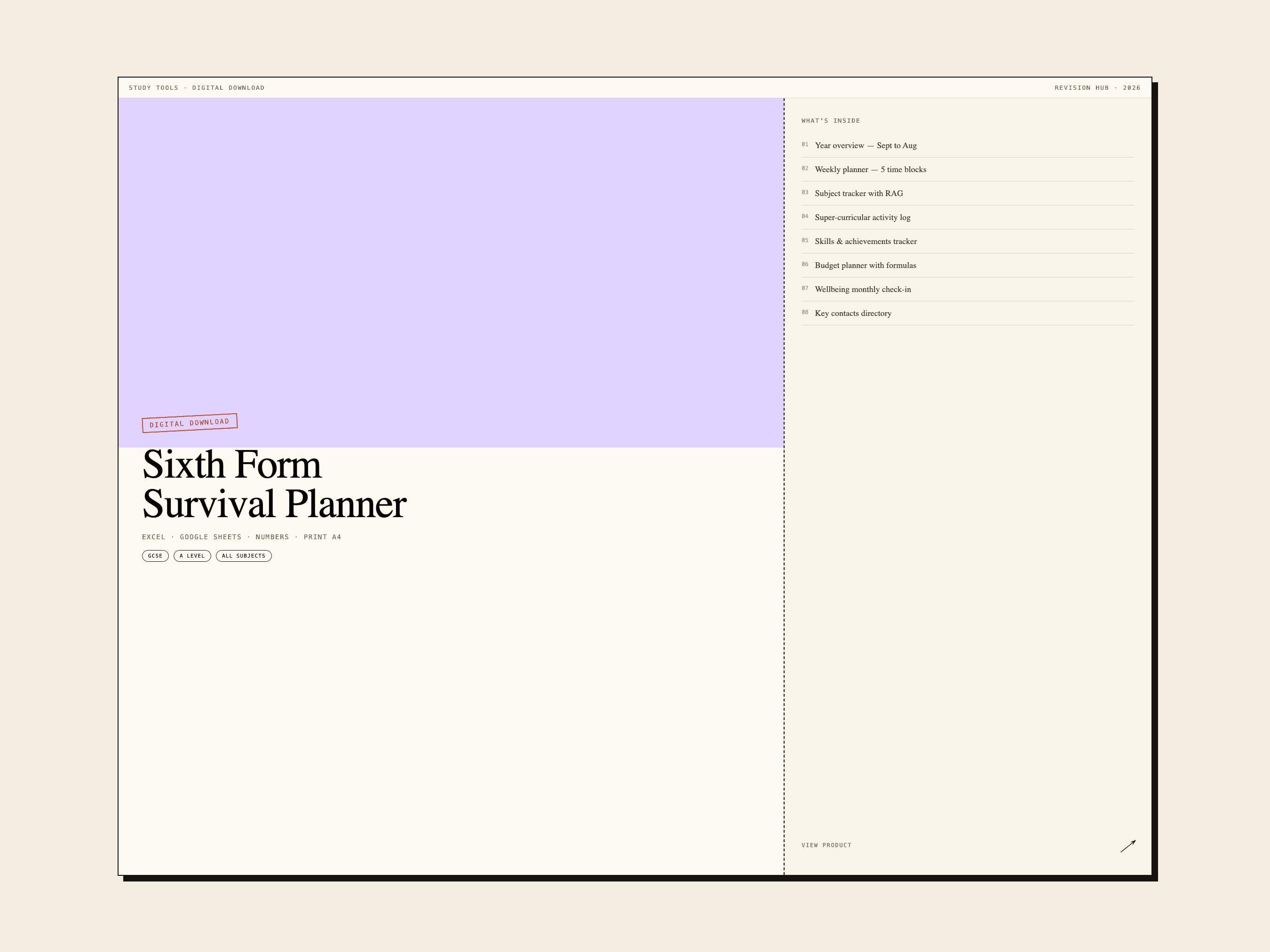
Sixth Form Survival Planner
£1.99From first day to results day — sorted
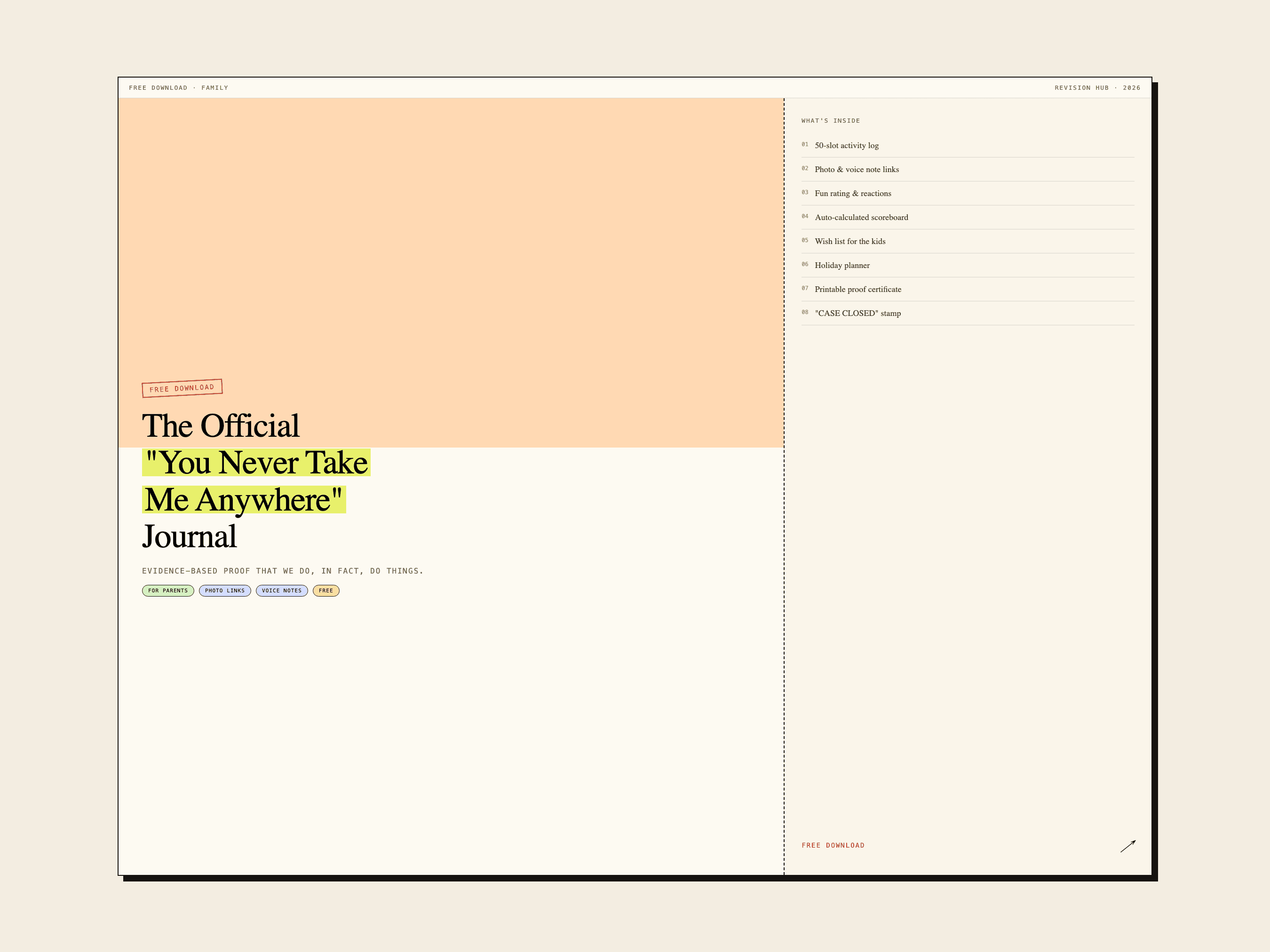
The "You Never Take Me Anywhere" Journal
FREEEvidence-based proof that we DO, in fact, do things
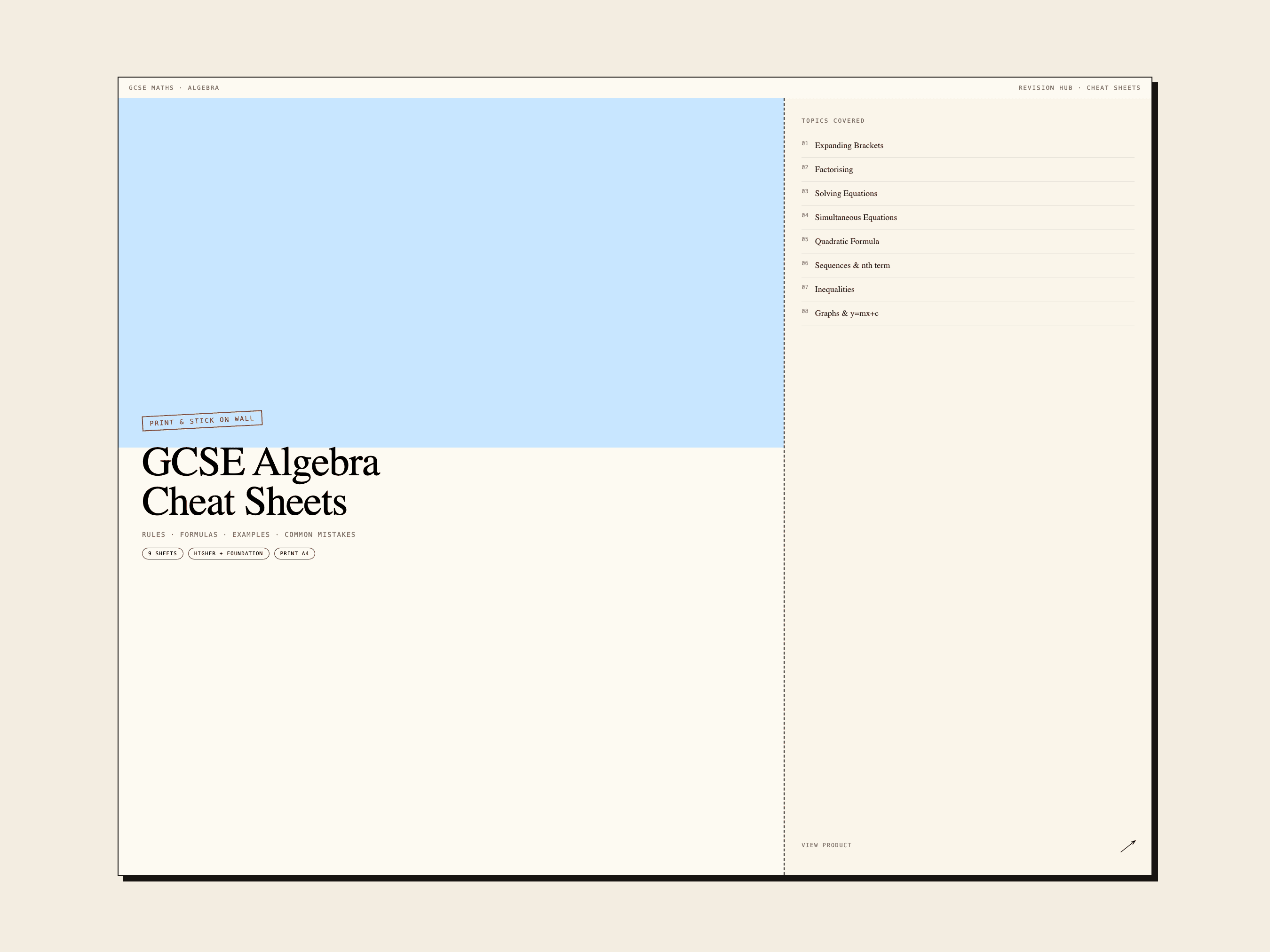
GCSE Algebra Cheat Sheets
£1.99Print them. Stick them on your wall. Ace algebra.
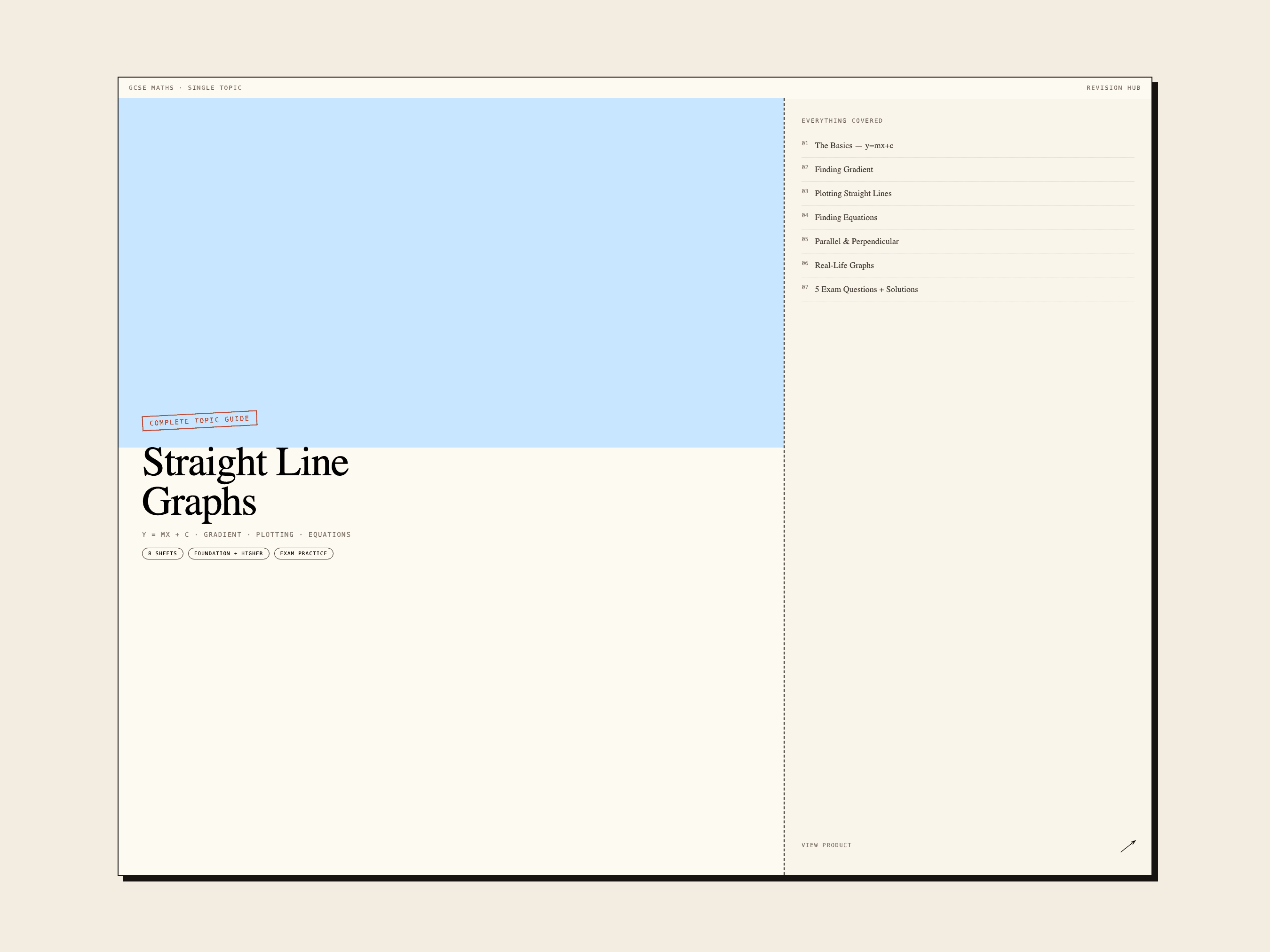
GCSE Straight Line Graphs — Complete Guide
£1.99y = mx + c doesn't have to be scary
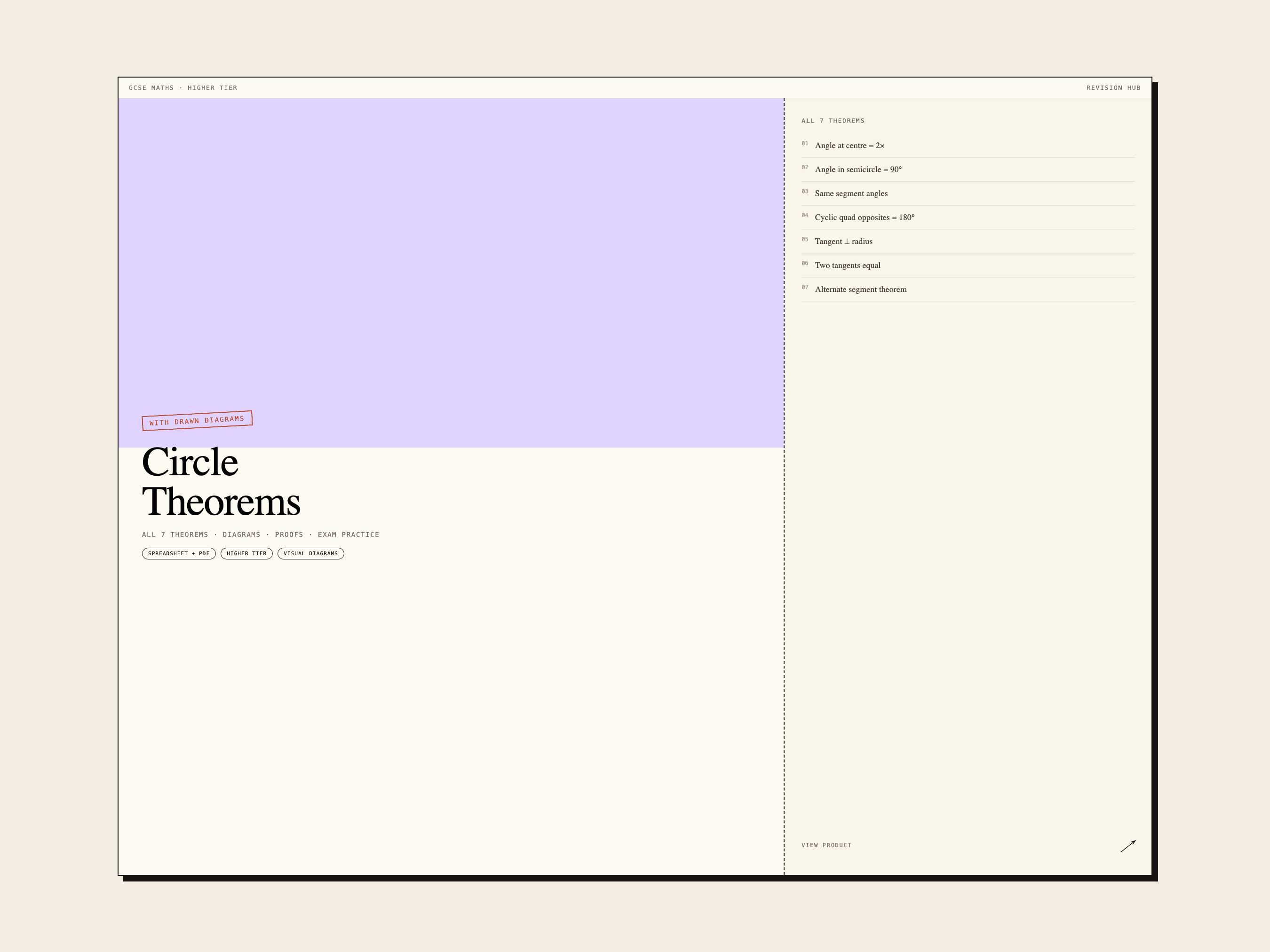
GCSE Circle Theorems — Complete Guide
£2.49All 7 theorems with actual drawn diagrams
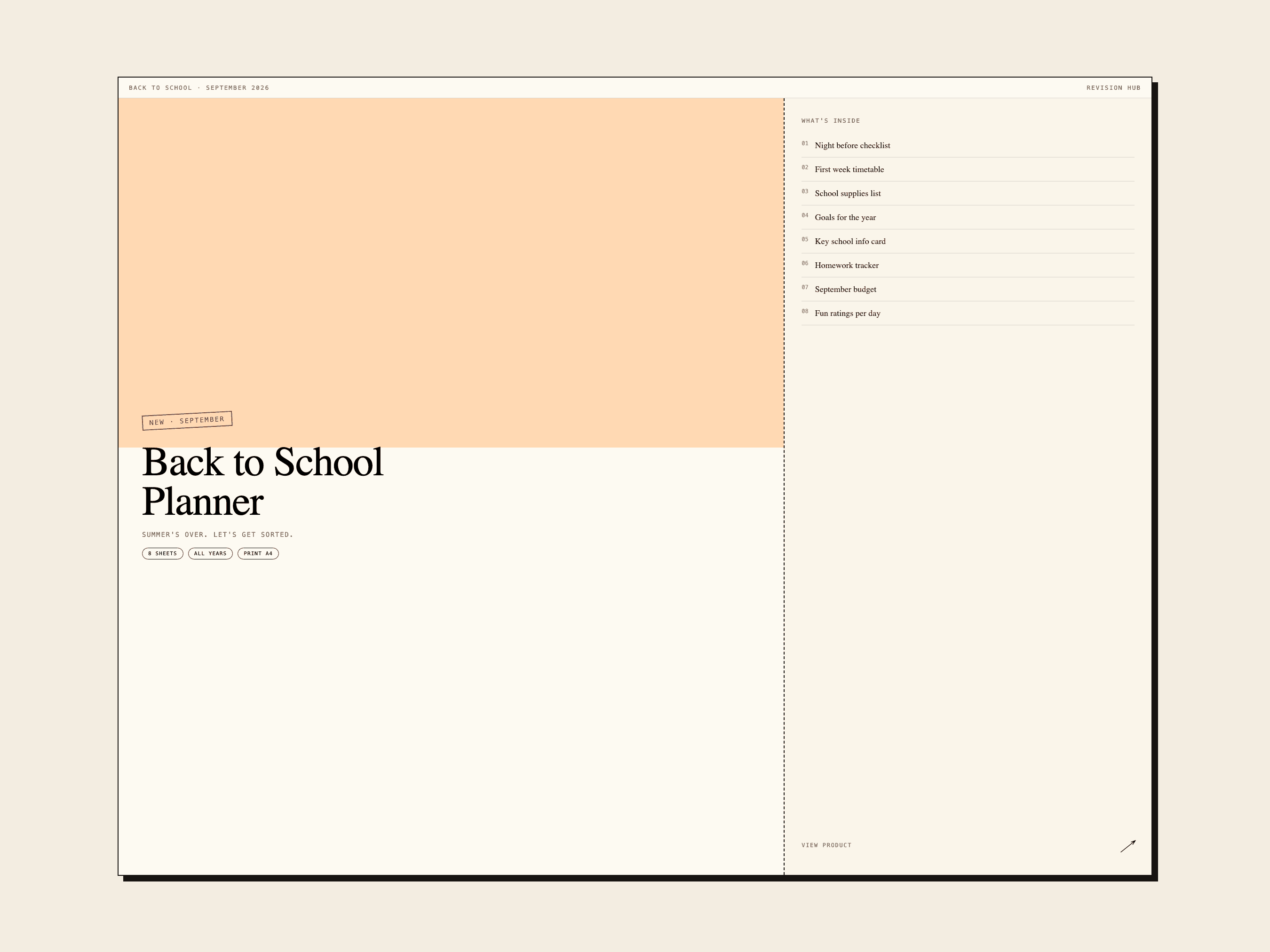
Back to School Planner
£1.49Summer's over. Let's get sorted.
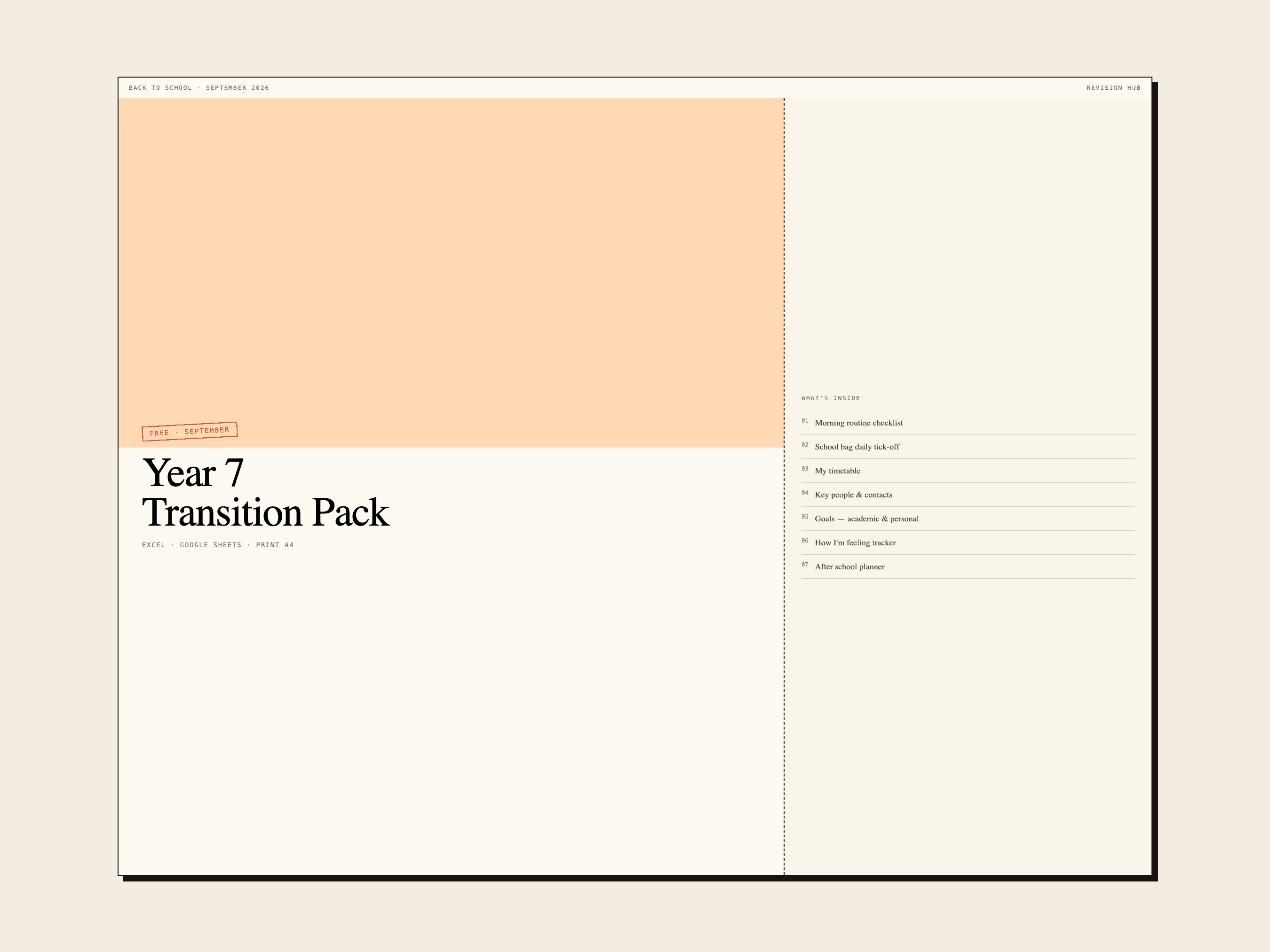
Year 7 Transition Pack
FREEStarting secondary school? We've got you.
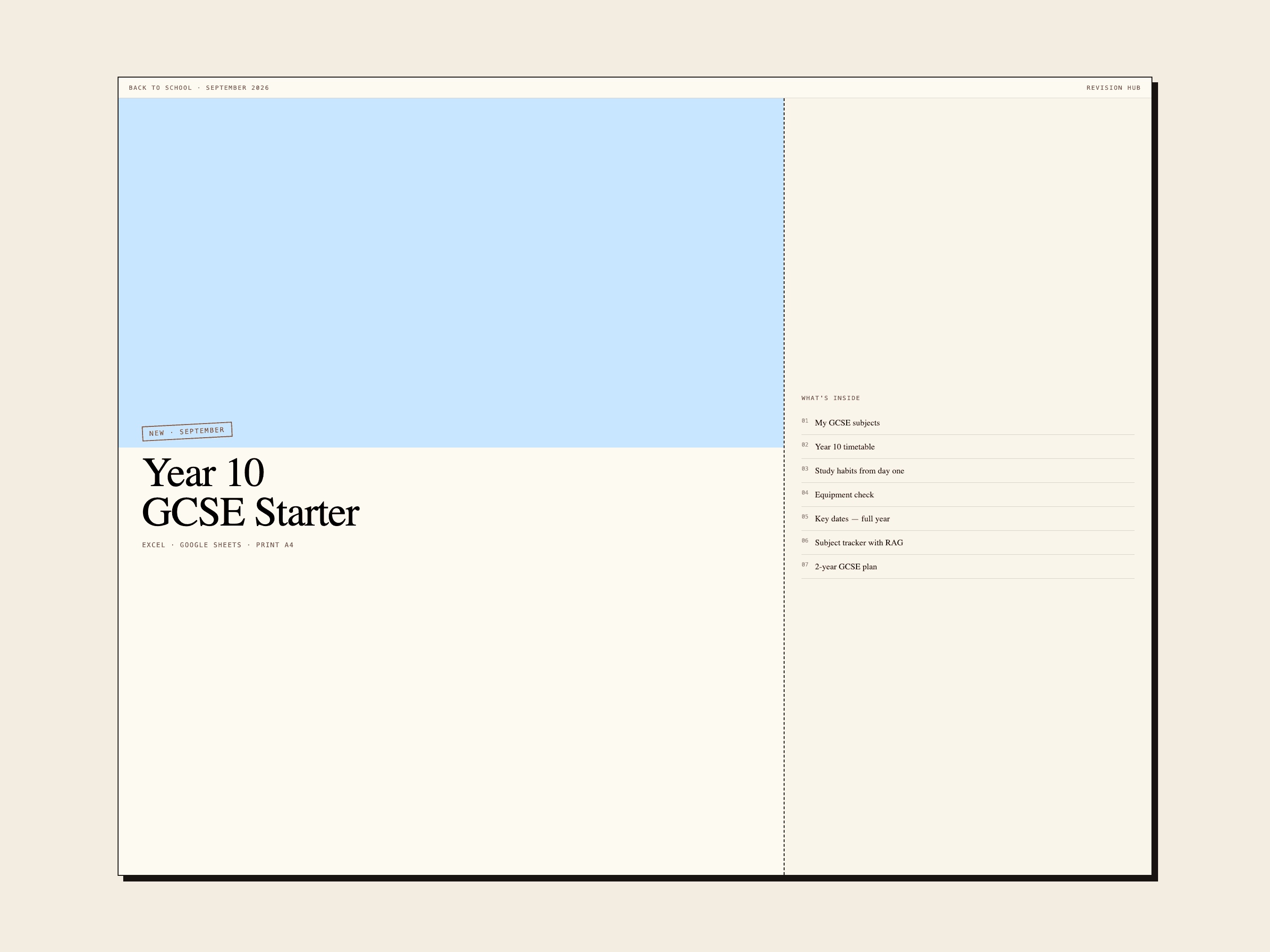
Year 10 GCSE Starter Pack
£1.49GCSEs start now. Let's plan them.